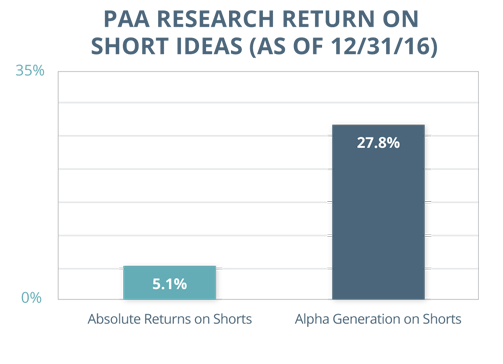
We are unique among
investment research firms

The following report outlines our long thesis on CWH as well as the feedback from our latest survey of independent RV dealers across the country.
READ MORE >“We believe that the low market penetration of medical insurance for pets coupled with our vet-centric model allows for 20% revenue growth for at least another 10 years. Perhaps we could expect growth to slow once we would need to...
READ MORE >Last Friday was a rough trading day in the residential real estate services space for ardent supporters of the efficient market hypothesis. After all, the original case against the National...
READ MORE >“We expect to roll off a portion of our other business starting in 2025 subject to certain limitations in order to allow us to utilize capital for other purposes, but we do not control the...
READ MORE >“When we went into 2023, we assumed 12% because that was what we saw in '22. We actually saw a 15% level of inflation, which meant that we were already behind the curve, and we had to catch up again. We started in...
READ MORE >The “Minsky moment” has finally arrived for EXPI, as the company’s agent count declined for the first time in history. Never forget, for EXPI’s AGENTS it’s always...
READ MORE >“The truth is, for 2023 the only metric that matters for CWH and the RV industry at large is INVENTORY. Appropriate inventory channel management preserves economics for everyone in the space and positions the industry for growth once again...
READ MORE >“While we saw a surge in pet adoptions during the pandemic period, coupled with stimulus and facilitated discretionary spending, the current economic environment means many consumers are...
READ MORE >“It should be noted that for Pet Insurance, this Department generally considers renewal increases more than +30% to be unduly burdensome….It should be noted that generally DFS...
READ MORE >PAA Research surveys lighting agents across the country on a semi-annual basis. The latest survey was conducted in the first two weeks of December. 17 lighting agents responded to our...
READ MORE >“I am feeling more positive about the Trex consumer today than I was feeling a year ago” Bryan Fairbanks, President and CEO. Trex Company, Inc. 10/30/23. 3Q23 Earnings Conf. Call Imagine having the unmitigated gall to...
READ MORE >“Again, we covered a lot and provided more color and guidance than we usually do. In that spirit, I want to remind you that we are here today to discuss our financial results and the progress we made integrating Bed Bath & Beyond. We appreciate...
READ MORE >“And we expect currently that, that will be fully rolled off by the end of next year. We are still enrolling new business for Pets Best as we sit here today. So there is still a lot...
READ MORE >In our view there are four issues that are paramount for CWH shares and that will dictate how the stock trades over the short term 1.How much will demand pull forward in 2020-1H22 impact sales of RVs going forward? The RV...
READ MORE >Heading into 2023, we thought the broader industrial complex would be fertile ground for short ideas, particular those companies that generated meaningful revenue, earnings, and cash flow growth through...
READ MORE >Following OSTK over the past 4-years has been nothing short of exhausting. Over the past 6-12 months, we have grown increasingly disappointed and frustrated with OSTK’s execution miscues, market share losses, poorly crafted investor...
READ MORE >“I was at eXp for 3 years, made ICON Agent every year, but the opportunity to build a big downline at eXp is long gone. I went to LPT Realty and have grown from 30 agents to almost 300 in one year. Best thing I could of...
READ MORE >“And then finally, we are, for the first time in our history, overcapitalized, Sometimes, we have cash and we have to put it into risk-based capital as we continue to grow. That is not the case...
READ MORE >Perhaps sell-side analysts and investors still don’t understand the true nature of EXPI’s business. There’s a reason this company has missed EBITDA expectations SEVEN out of the...
READ MORE >Even though we know we would be better off not listening to a single word from the TRUP management team, we simply cannot turn our attention away. It is utterly fascinating to us that a loss...
READ MORE >The following report outlines our long thesis on CWH as well as the feedback from our latest survey of independent RV dealers across the country.
READ MORE >“We believe that the low market penetration of medical insurance for pets coupled with our vet-centric model allows for 20% revenue growth for at least another 10 years. Perhaps we could expect growth to slow once we would need to...
READ MORE >Last Friday was a rough trading day in the residential real estate services space for ardent supporters of the efficient market hypothesis. After all, the original case against the National...
READ MORE >SELL/SHORT
$4
SELL
$50
SELL/SHORT
$45
SHORT
$18
SELL/SHORT
$5
SELL/SHORT
$42
LONG
$75
LONG
$128
SELL/SHORT
$50
SELL/SHORT
$50
SHORT
$50
PAIR TRADE
$10
PAIR TRADE
$30
SELL/SHORT
$10
SHORT
$101
SHORT
$15
SHORT
$0
SHORT
$14.00
SHORT
$22
SHORT
$100